
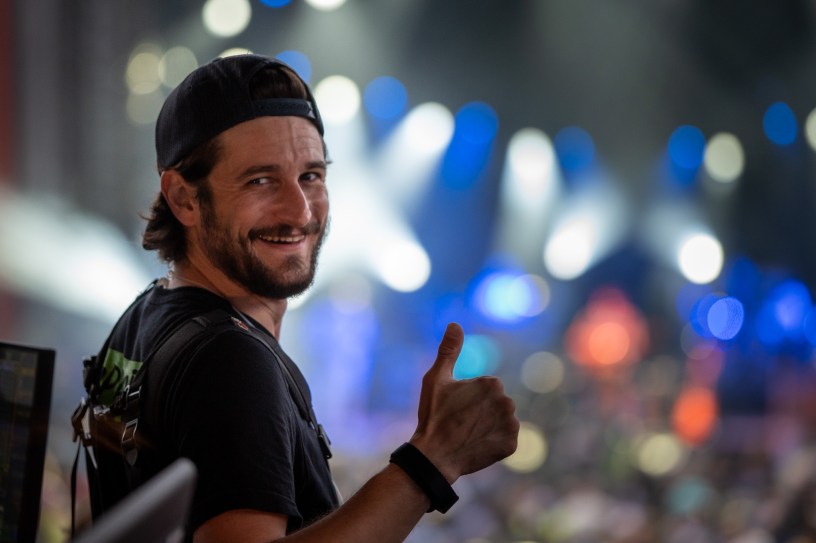
Concert photography is one of those rare crafts that lives in the space between art and energy. It’s about freezing the fleeting, capturing the pulse of a room, and telling the story of a show long after the last note fades. In this new series, I’ll be sitting down with photographers who bring their unique eye to the pit, from those carving out their first opportunities to those who’ve built full-time careers documenting live music. Each conversation will explore their journeys, creative processes, and the realities of shooting in a world where the lights, crowds, and music never stay still. To kick things off, I’m excited to introduce Adam Berta, whose work has far reaches in the concert and festival scene across the country. Most will know him and the reputation he’s earned as tour photographer for the band Goose. I had the opportunity to catch up with Adam as our paths crossed at the band’s stop in Columbus, OH at Kemba Live! at the end of last month.
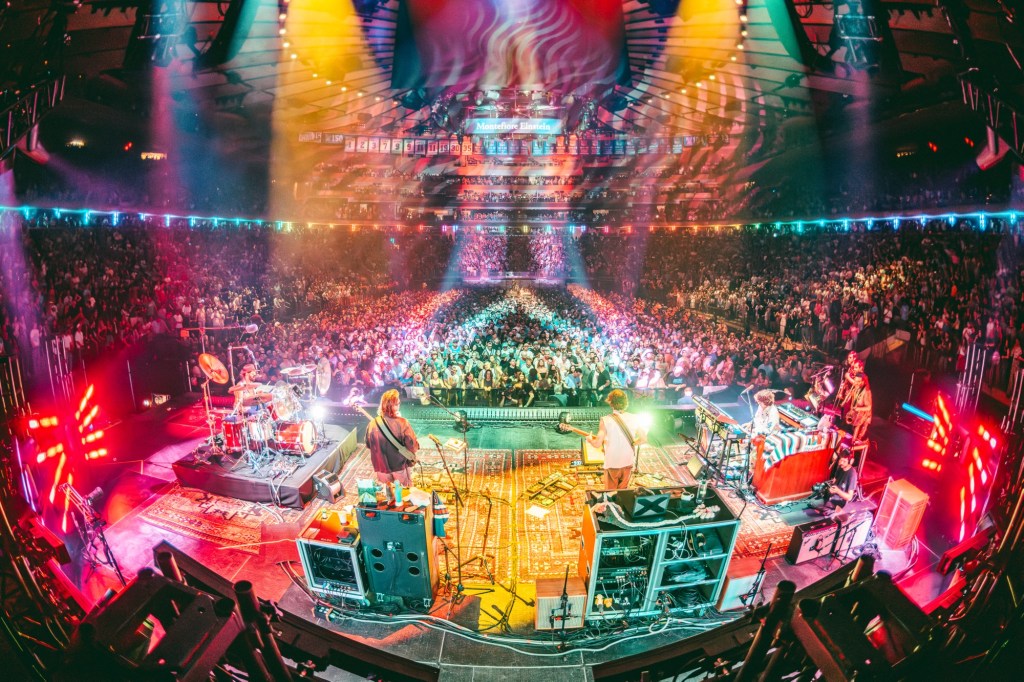
Midwest Riff Review: Adam, thanks for taking the time to chat with me. I’ve been a fan of your work since first stumbling upon your images on Instagram and realizing we’re both from Columbus. You were kind enough to give me some festival tips a couple of years ago and I’ve always appreciated your openness as pertains to photography. I’m sure our readers will want to know, when did you first get interested in photography and when did your interest veer off into the realm of concert photography?
Adam Berta: I got into photography as a teenager (or slightly before.) I always had a little crappy point and shoot I’d carry around to document my friend group’s adventures. We used to do urban exploring in abandoned Columbus factories and sewer tunnels and I’d typically have camera in hand. I stopped carrying a camera for a few years in my early 20s while I tried to figure out what I wanted to do with my life. In my mid 20’s, I decided that I needed to work in the music industry after discovering that concerts were my happy place. I started interning with Chris Salvato of Weird Music to find out how I could fit into the music puzzle and ended up picking up the camera to create content for shows he put on. It wasn’t long before I became obsessed with everything involving throwing and shooting shows.
MRR: I’m sure it’s been quite a while ago, but do you remember the first show you photographed?
AB: I’m not 100% sure who the first band I shot was, but I shot some pretty incredible acts my first year at small jamband dive bars in Columbus. I shot Jeff Austin Band, Billy Strings, and Goose shortly after starting my journey.
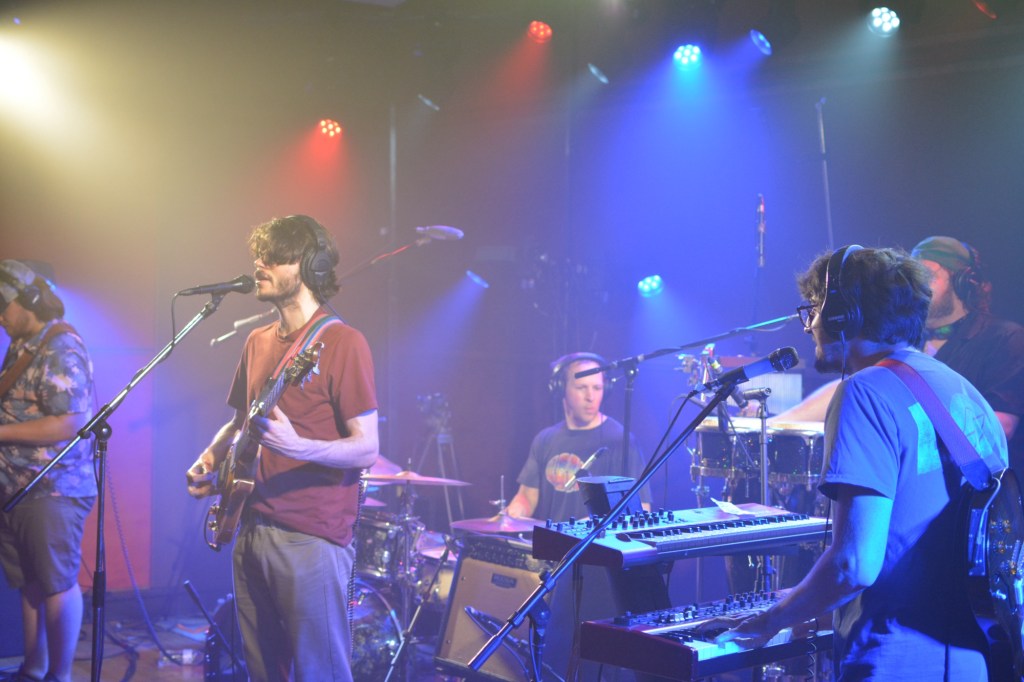
MRR: And how did you get connected with those bands?
AB: On the advice of Chris [Salvato], I just emailed or Facebook Messaged the acts before their shows and explained that I was getting into concert photography. I just asked if I could shoot the shows and I found most acts were super accommodating.
MRR: For those that have followed your work, I believe they’d share my opinion that you have a really unique and recognizable style. How would you say your style has evolved over time?
AB: My style has changed pretty drastically since I started shooting. My early edits were a super punchy, vibrant and colorful style. Then, while working with Goose, I developed a kind of psychedelic/filmic style. Now, I think I’m somewhere in between, reintroducing some of the higher contrast and sharpening elements of my earlier editing style with the color pallets and high-grain elements of my more filmic style.
MRR: Fans will want to know, how you were able to get hooked up with a major touring band such as Goose.
AB: When I was interning with Chris Salvato, I initially wanted to be a talent buyer/promoter like he was. He was super good at finding great acts, seemingly out of thin air, to play shows at the bar where he was booking shows. In an attempt to do the same, I googled “Up and coming jam bands” and spent a few days combing through random articles, and social media posts writing down a list of all the band names. I went through these one by one and listened to 1-2 songs by each artist (it was probably 3 pages of college rule notebook paper) and marked the artists I liked a lot. One of those was Goose. I fell in love with Moon Cabin after listening to Arcadia and knew that there was something extremely special about these guys. I started messaging them on Facebook and Peter and I quickly became friends. I tried to get them booked in Columbus for about a year or two and eventually got them to play in Columbus at Chris’s recording studio for an audience of about 30-40 people. Price of admission included all you can eat pizza and all you can drink keg beer.
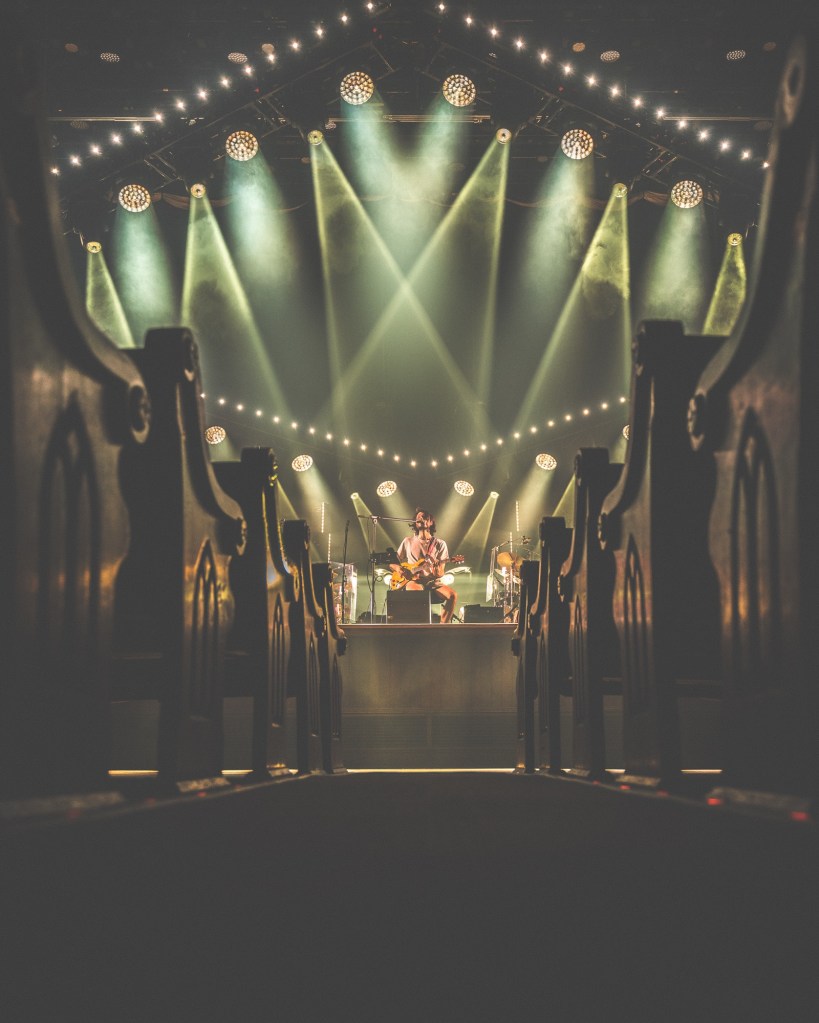
MRR: That’s amazing to think about them playing for a crowd of 30-40 knowing they’re filling arenas only a few years later. It must be a real rush to be on tour with an outfit like Goose. What types of things do you look for photographically on show day and during the show? Do they give you a specific shot list for you or do they leave it up to your personal creativity?
AB: Being on the road with a major touring band is pretty cool. It’s a lot of work and long hours but it’s super rewarding. As far as shooting on a show day, I try to make sure I cover the essentials; shots of every band member performing, front of house lighting design shots, behind the scenes hangs, shots of crew, audience, etc… Basically my job is to cover the day in a way that visually tells the story of that day. There used to be a shot list but now it’s left up to me to decide what to shoot.
MRR: Those who’ve been following you will know that you’ve had the opportunity to shoot a few Phish shows of late. How did that opportunity come up? Is there more on the horizon?
AB: I originally got the opportunity to work for Trey Anastasio when Goose and Trey Anastasio Band did a co-headining tour a few years ago. TAB hired me to shoot a large handful of those shows, and thats where I made my first connections with their team. Recently, I followed up with some of those contacts and reached out about shooting Trey Solo in Columbus, and then the Phish Hampton shows, which I ended up getting hired for. Not sure if there is more on the horizon, but I’d be thrilled if there was!
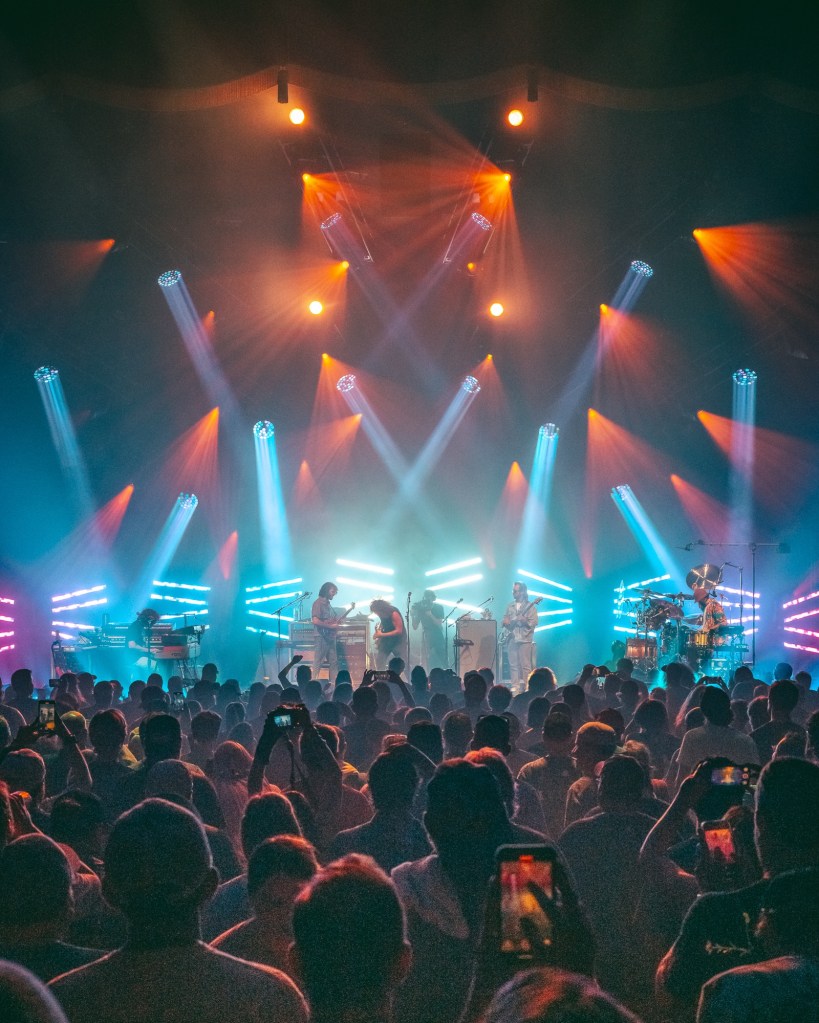
MRR: I don’t want to get too far into a conversation on gear in this series, but do you have any unique items you incorporate into your shooting flow like filters, plastic cups, the like that help you keep things fresh night after night?
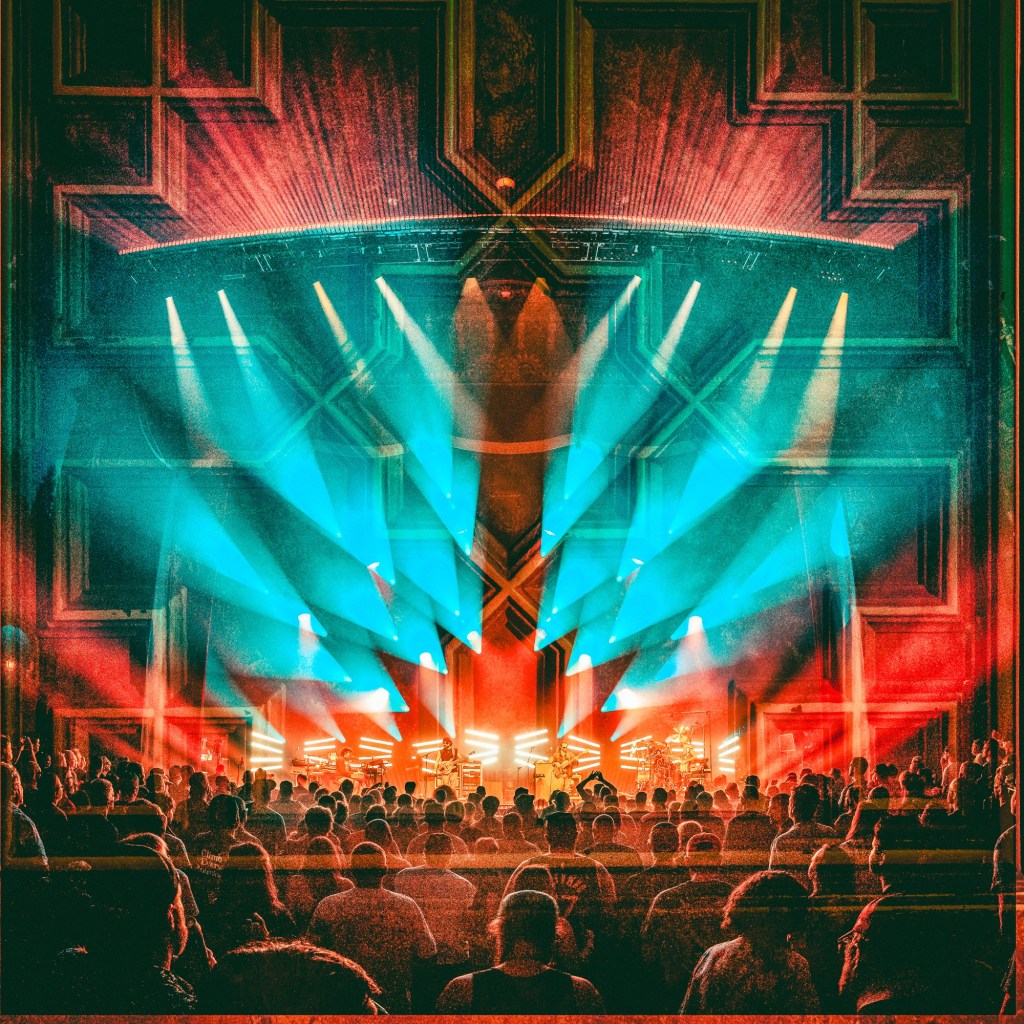
AB: I’ve experimented with all kinds of different lens modifiers and photo techniques. I like experimenting with weird stuff for sure. In 2019, me and a buddy made a kaleidoscope lens attachment that was basically just a 8 inch tube of mirrors glued to a lens filter. Recently I’ve been trying to develop a lens attachment that will allow the shooter to swap out (and stack) different lens effects on different areas of the frame. I’ve been playing with the concept for years but haven’t figured out exactly how it will work quite yet. I’ve also been playing with diffraction grating recently which is super interesting for shooting with stage lighting. Another way to keep things fresh while shooting the same act is to look for unique characteristics of different venues and try to integrate them into the images.
MRR: When you’re not on tour with Goose shooting the shows, do you have any other styles of photography you enjoy?
AB: I’m definitely in to shooting people and documentary style photography. I’m totally into nature and landscapes too. Ultimately though I’d say I have a love for action photography. Anything moving or challenging, with low light and movement is challenging and ultimately fun.
MRR: As I’m sure you’d agree, concert photography is a very dynamic and exciting “genre” of the art. What advise would you give to someone considering giving it a try?
AB: For anyone getting started, I’d recommend shooting as many shows as possible and working to develop a style that is unique to their eye. Once you’ve established what your go-to “look” is, it’s super important to develop relationships with the connections you make in the industry. Getting to know the artists, promoters, management, even bartenders or security people at venues can lead to all kinds of other opportunities down the road. If you’re passionate about what you do, you’ll naturally attract others that are passionate about the same things. Keeping the communication going with those people would be my biggest piece of advice.
MRR: What’s next on your agenda once the Goose tour wraps up?
AB: After this Goose run, I may go out for a week or two with a band called Dizgo out of Indianapolis. They’re great friends of mine and are really picking up some steam lately. The experience working with them is great, as I’m able to shed a little light on what I’ve seen work and what I’ve seen not be so successful as far as touring goes.
MRR: I’m sure you’ve had the opportunity to meet and shoot next to many great concert photographers around the world some well known, others less so. Who are a couple of your favorites that you’d suggest folks check out.
AB: Jay Blakesberg is incredible and I’ve looked up to him since I was starting out. He ended up being a huge mentor to me and is a good friend now. Also, Annie Leibovitz is a GOAT, as was Jim Marshall. Rene Heumer, Josh Timmermans, Tara Gracer, Peter Wallace, Andrew Blackstein, and Juliana Bernstein are also all photographers I really admire.
MRR: Adam, thanks so much for your time. I really appreciate you sharing your experiences with me and especially appreciated being able to watch you in action a bit at the Columbus show. I look forward to seeing what’s to come on your photographic journey.
That wraps up my conversation with Adam Berta, giving us a glimpse into his passion, dedication, and creativity that goes into capturing live music. To see more of Adam’s work you can check him out on his website and on Instagram. I hope his story inspires both fans of concert photography and those looking to explore the craft themselves. If there’s a photographer you’d love to see featured in this series, or someone whose work you admire, drop their name in the comments or send me a message—I’d love to hear your suggestions for future interviews!
 Midwest Riff Review
Leave a comment